
Field notes
Writing on skin AI, measured honestly.
Research, methodology, and product thinking from the team building skin analysis for Fitzpatrick III–VI Bharatiya skin. Sources named, limitations stated.

Cosmetic or Medical? The Claims a Skin-AI Store Can Make
CLAIMSOne verb — "treats" — can move a skin tool from cosmetic to medical. Six EU claim tests, India's ad code and Germany's unfair-competition law, with a five-minute rewrite check.
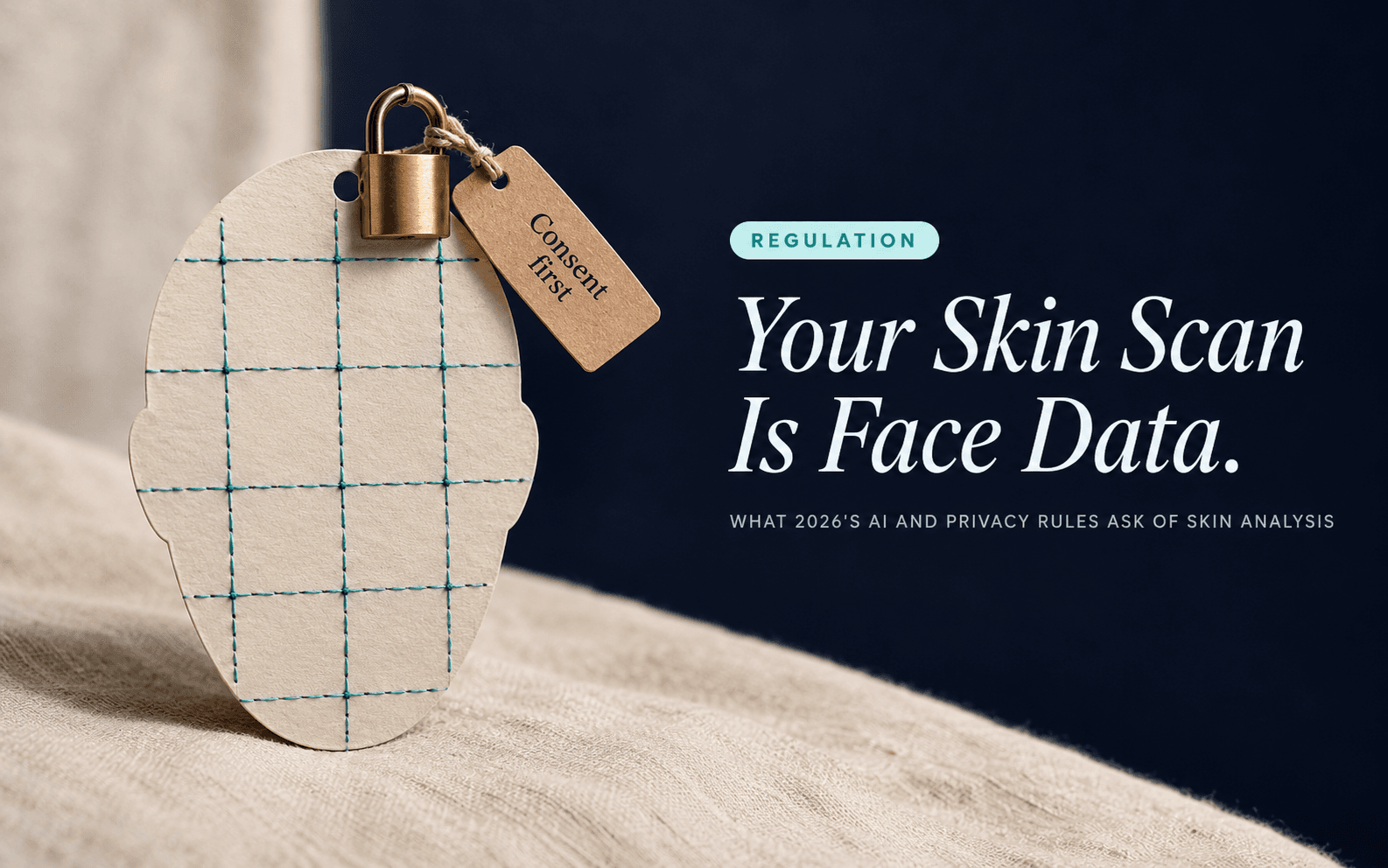
Your Skin Scan Is Face Data: What 2026's AI and Privacy Rules Mean for Skin-Analysis Tools
REGULATIONA quiz collects answers. A scan collects a face. Three sets of rules, two of them with dates this year or next, decide what a skin-AI vendor must tell shoppers and keep from them.
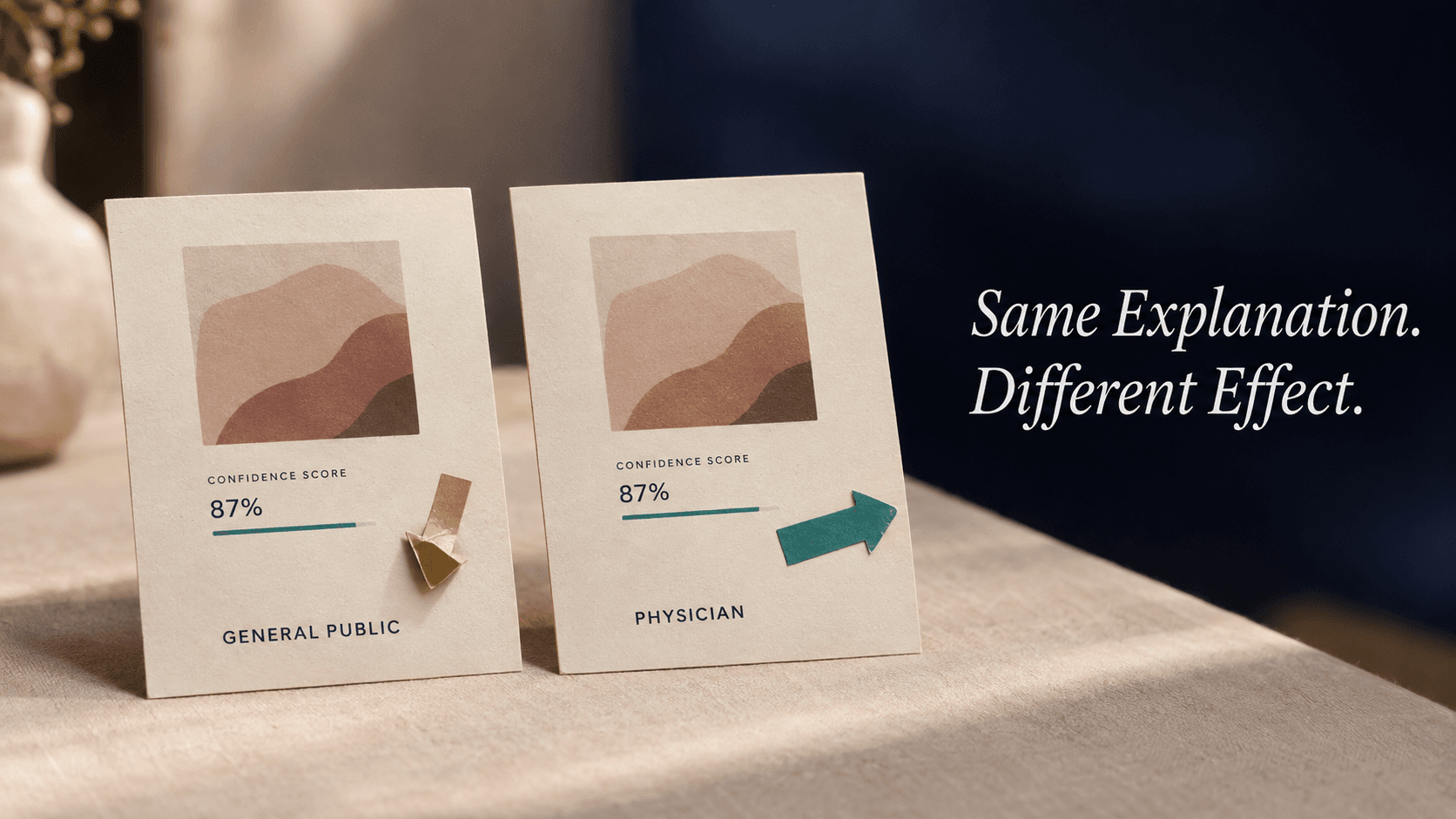
New Research: Explainable AI Can Backfire on the Exact Users Who Need It Most
NEW RESEARCHA fairness-constrained model narrowed the skin-tone accuracy gap for everyone. The AI explanations layered on top of it didn't — and for one group, they made wrong answers worse.
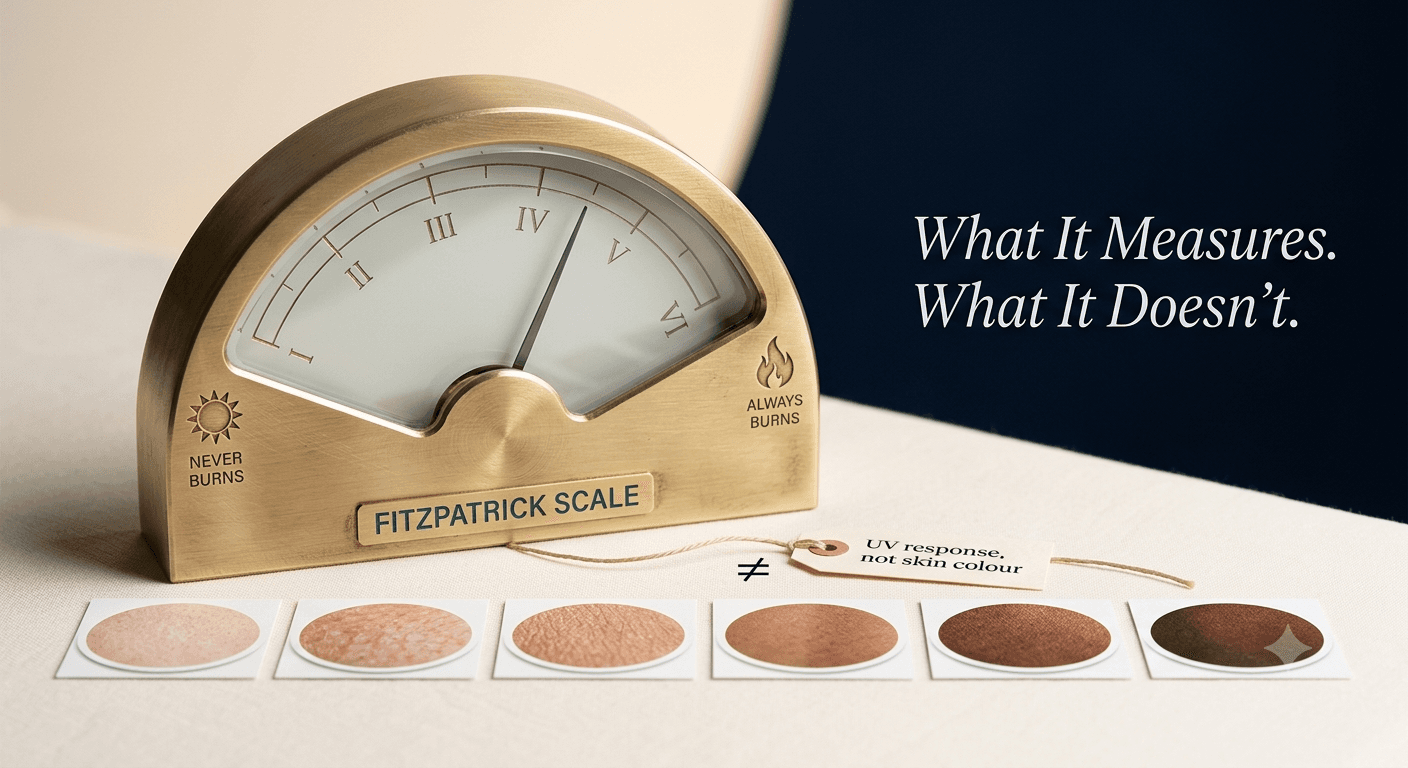
The Fitzpatrick Scale Explained: What It Measures, What It Doesn't, and Why AI Teams Get It Wrong
FITZPATRICK SCALEDermatology's most-cited skin scale was built in 1975 to answer one question: how much UV can this patient take before they burn? It was never a colour chart — and treating it like one is where a lot of skin-AI accuracy problems start.
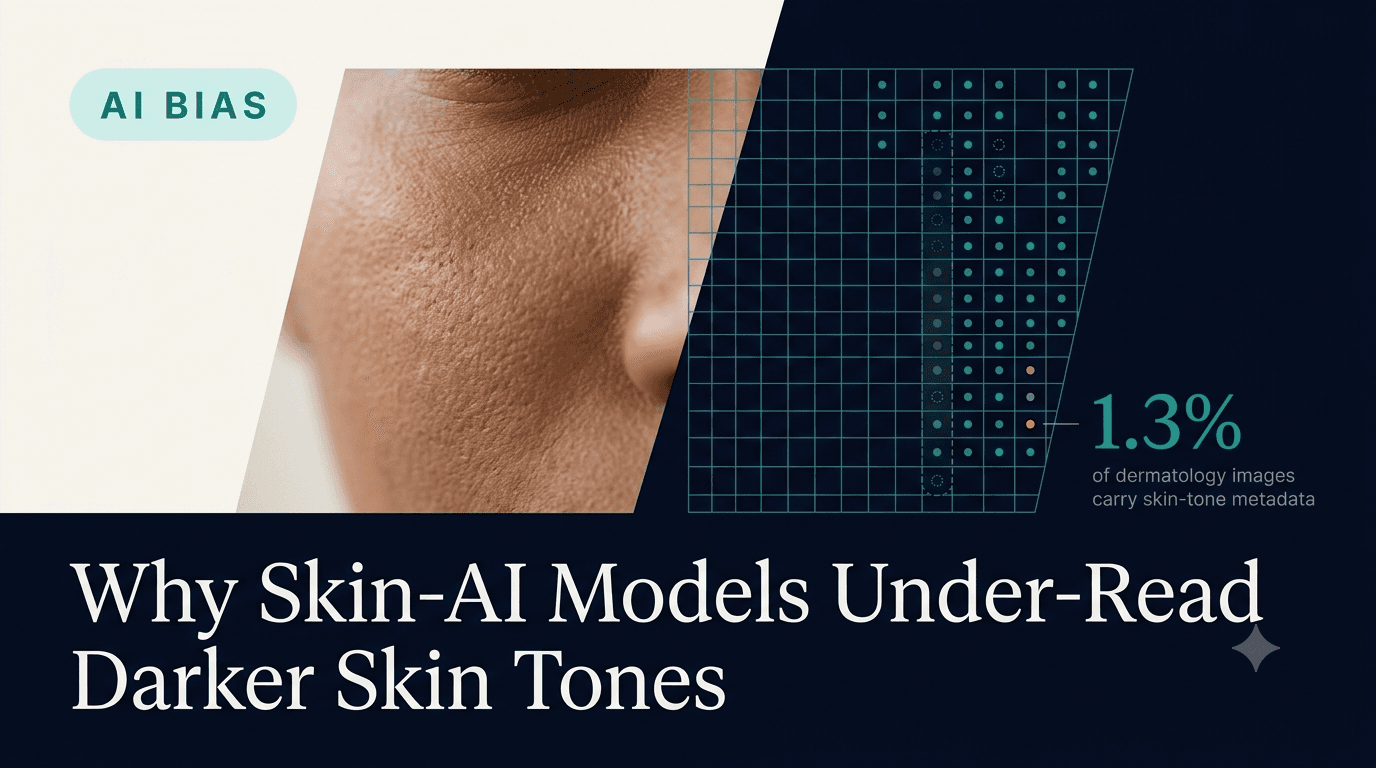
Why Skin-AI Models Under-Read Darker Skin Tones: What the Research Actually Shows
AI BIASAI bias in dermatology isn't a hot take — it's a reproducible finding across a growing body of peer-reviewed research. Here's what that research actually says, with sources.
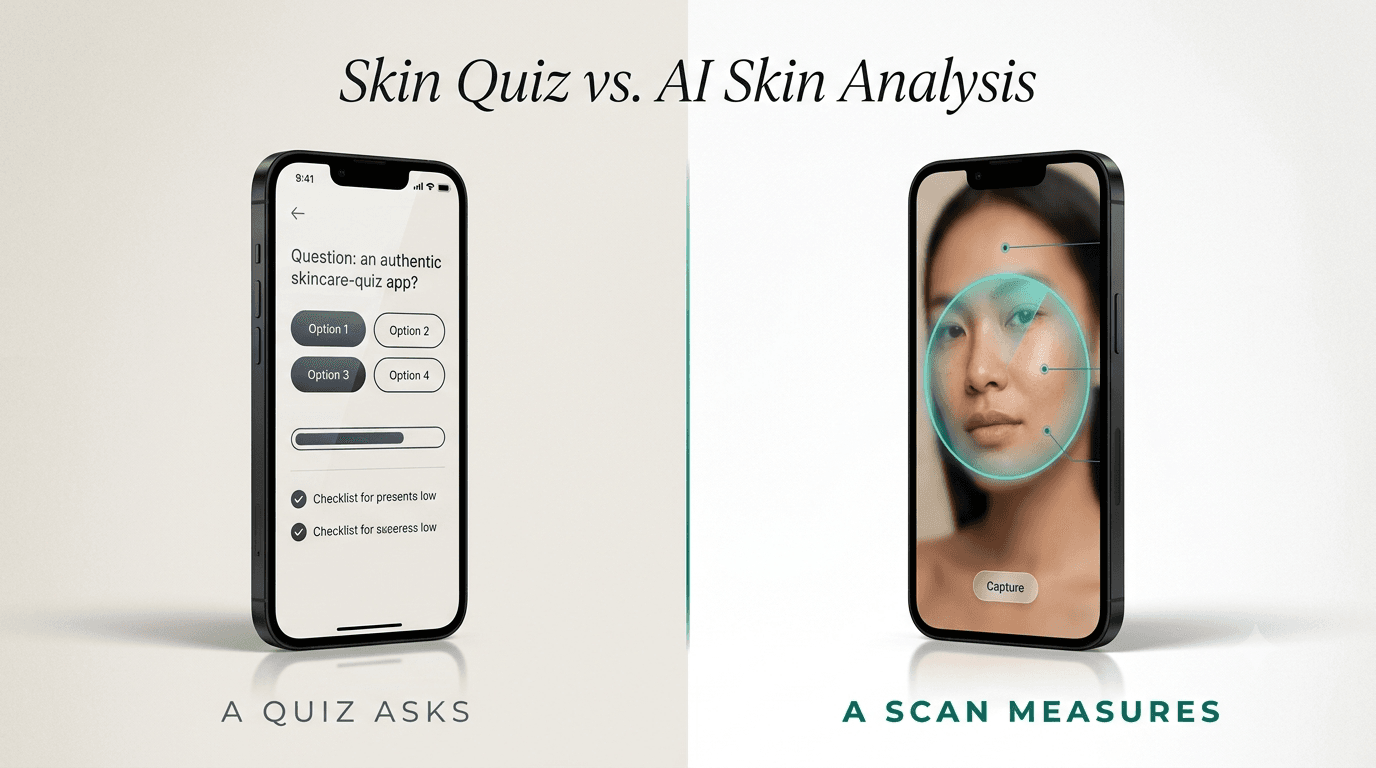
Skin Quiz vs. AI Skin Analysis: What Actually Converts for D2C Beauty Brands
D2C GROWTHA quiz asks your customer what their skin is like. A scan measures it. The gap between those two inputs is where returns, repeat rate and AOV quietly get decided.
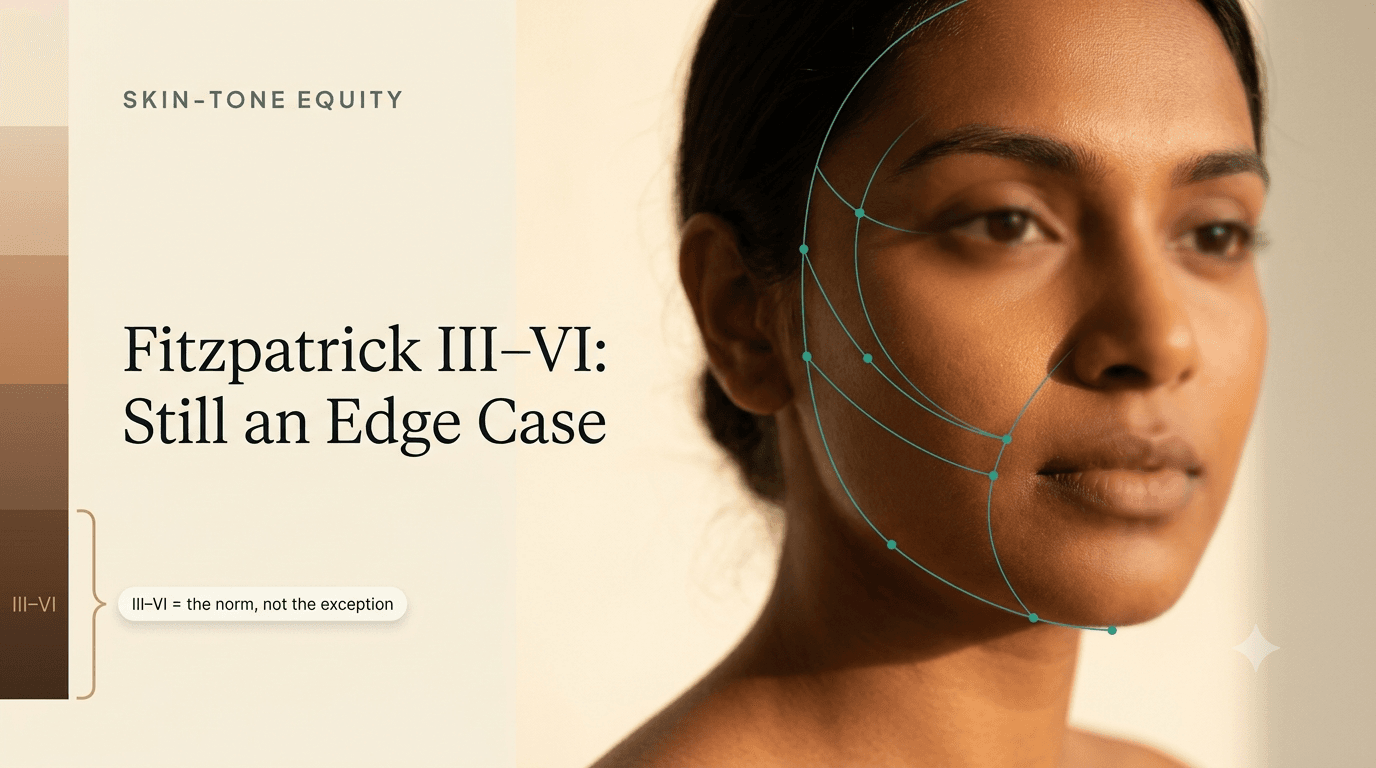
Fitzpatrick III–VI: Why India's Majority Skin Tone Is Still an Edge Case in Most Skin AI
AI BIASMost skin-analysis AI was trained on Fitzpatrick I–II skin and extended outward. For a market where III–VI is the norm, that isn't a rounding error — it's the whole distribution.